Healthcare environments never truly slow down. Patients arrive at all hours. Families move through waiting areas. Staff manage pressure-filled situations daily. Security risks develop quickly when oversight gaps appear.
Hospitals, clinics, and long-term care facilities must balance compassion with operational control. That balance becomes difficult without structured protection systems. Many administrators now look for professional healthcare security services to maintain safe environments while supporting uninterrupted care delivery.
Healthcare safety also intersects with public accountability. Health care in Canada is funded and administered primarily by the provinces and territories. Public trust depends on consistent protection of people, equipment, and sensitive information.
Why Risk Management Is Different Inside Healthcare Facilities
Healthcare spaces remain open to the public while handling controlled operations. Emergency rooms, pharmacies, and administrative offices operate under different risk levels simultaneously.
Unlike standard commercial buildings, healthcare environments experience emotional stress, unpredictable behaviour, and strict privacy expectations. Staff must focus on care delivery. Security teams must focus on prevention.
When risks overlap, small incidents can escalate quickly. Professional security services help maintain stability without disrupting patient experience.
1. Workplace Violence and Aggressive Behaviour
Healthcare workers face higher exposure to confrontational situations. Emergency departments especially experience heightened emotional tension.
Visitors may react strongly during medical emergencies. Patients experiencing distress may also become unpredictable.
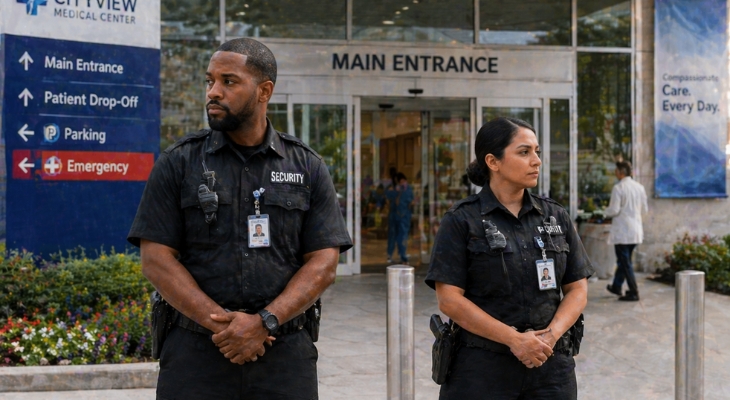
Trained guards prevent escalation through calm communication and controlled intervention. Facilities using professional healthcare security guard service deployments often reduce incidents before they develop into larger disruptions.
Security presence also reassures staff working overnight shifts. When employees feel safe, productivity and morale improve.
2. Unauthorized Access to Restricted Medical Areas
Hospitals contain sensitive spaces requiring strict access control. Pharmacy storage areas and data rooms present attractive targets.
Unauthorized entry can expose confidential patient information or controlled medications.
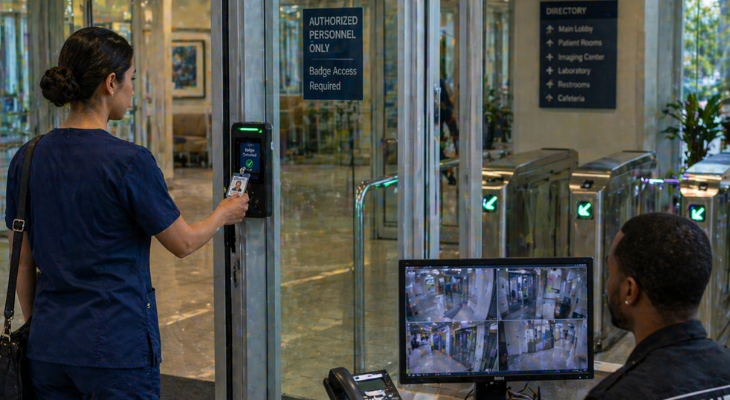
Access checkpoints, supported by access control and security guard supervision, create accountability. Electronic credential verification further strengthens oversight.
Government emergency planning guidance reinforces structured preparedness as emergency management is a shared responsibility. Healthcare organizations must coordinate internal staff and external security partners to maintain operational readiness.
3. Theft of Medical Equipment and Pharmaceuticals
Portable diagnostic tools carry high replacement costs. Pharmaceuticals present both financial and regulatory risks.
Internal theft remains a growing concern in complex facilities with rotating staff schedules.
Integrated protection combines surveillance and physical patrols. Facilities often rely on video monitoring services for healthcare environments to observe storage rooms continuously.
A 24/7 video monitoring service allows rapid response when suspicious activity occurs. Monitoring teams alert on-site guards before the loss escalates.
Security visibility alone often deters opportunistic theft.
4. Cybersecurity Threats Targeting Healthcare Networks
Healthcare systems increasingly depend on digital infrastructure. Connected medical devices create efficiency but also vulnerability.
Ransomware attacks can disrupt treatment schedules and expose confidential patient records.
Canada’s national cyber safety program emphasizes collective responsibility. Cyber security is a shared responsibility. Facilities benefit from combining physical protection with cyber security services, company expertise and IT security services integration.
Server rooms require restricted entry. Monitoring teams track unusual behaviour near sensitive equipment.
Cyber and physical risks now overlap. Effective healthcare protection treats them as one system.
5. Alarm Failures and Delayed Emergency Response
Healthcare emergencies require immediate attention. Alarm delays create serious liability concerns.
False alarms also disrupt operations and cause unnecessary evacuations.
Facilities increasingly implement alarm system monitoring service support combined with false alarm detection technology to maintain response accuracy.
When alerts trigger, trained responders verify conditions before escalation. This prevents panic while maintaining compliance expectations.
A coordinated security alarm response service ensures that incidents receive rapid assessment.
6. After Hours Security Gaps
Healthcare operations continue overnight even when administrative staffing decreases.
Parking areas, entrances, and loading docks often experience reduced visibility during late hours.
Mobile patrols provide active deterrence across large campuses. Many organizations rely on mobile patrol security guard service coverage to monitor multiple access points efficiently.
Remote surveillance further strengthens oversight. A remote video surveillance service monitors exterior areas where staffing cannot remain constant.
Consistent patrol patterns discourage vandalism and unauthorized loitering.
7. Crisis Situations and Large-Scale Emergencies
Healthcare facilities must respond quickly during disasters or unexpected events. Mass casualty incidents, evacuations, or facility lockdowns require coordinated leadership.
Security teams support communication, control and crowd management.
Facilities implementing crisis management security planning alongside crisis management services maintain clearer command structures.
Fire risks also increase during renovations or equipment maintenance. Temporary hazards often require watch security services to maintain safety compliance.
Prepared teams reduce confusion during high-pressure situations.
8. Security Risks in Remote or Temporary Healthcare Locations
Alberta frequently operates remote healthcare clinics supporting industrial operations.
Oil sands medical units and temporary workforce clinics face unique vulnerabilities. Limited infrastructure increases exposure to trespassing or equipment theft.
Mobile technology now supports rapid deployment security. Organizations increasingly depend on mobile security trailers equipped with cameras and lighting systems.
These units provide visibility without permanent installation.
Facilities also combine them with camp security, Alberta operations, and trained camp security guard deployment to maintain continuous oversight.
How Professional Healthcare Security Services Reduce Risk
Healthcare protection requires layered strategies. Professional teams combine trained guards, electronic monitoring, alarm response, and cyber awareness.
Facilities working with experienced providers gain structured reporting systems and trained escalation procedures.
Integrated services also support compliance documentation during audits or investigations.
Security should feel supportive rather than intrusive. When implemented correctly, protection blends naturally into daily healthcare operations.
Conclusion
Healthcare facilities carry immense responsibility. Patients expect safe treatment environments. Staff deserve reliable workplace protection.
Security risks rarely appear alone. Violence prevention, cyber threats, and emergency response planning must work together.
Professional healthcare security guard services help organizations manage these risks proactively.
Strong preparation allows healthcare providers to focus on what matters most. Delivering care with confidence.
About Us
GPS Security Group provides commercial and industrial protection services across Western Canada. The organization supports healthcare environments with trained personnel and integrated monitoring solutions.
Experience across healthcare, remote operations, and crisis response allows tailored protection planning for complex environments.
If your facility requires structured risk planning or monitoring support, contact us today for professional healthcare security consultation.