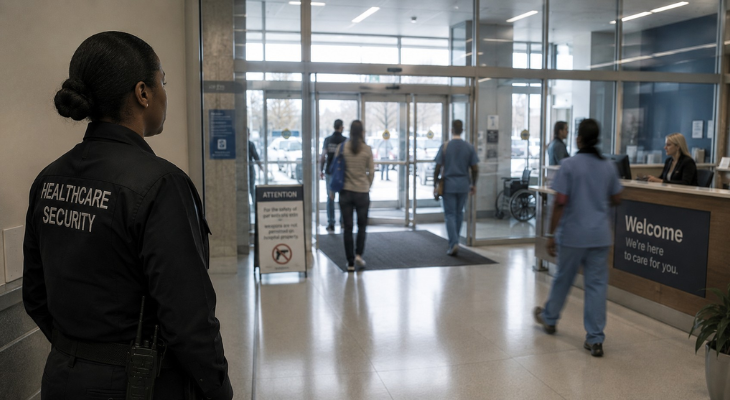
Healthcare facilities face far more security pressure today than they did even a few years ago. Hospitals now manage physical threats, cyber risks, emotional confrontations, unauthorized access, and operational disruptions simultaneously.
In 2026, healthcare security is no longer limited to guards at entrances or cameras in hallways. It has become a critical part of patient safety, staff protection, and hospital operations.
Hospitals operate around the clock. Thousands of people may move through a facility every day. Patients, visitors, contractors, emergency responders, and medical staff all require access to different parts of the building. That constant movement creates security challenges that many commercial properties never experience.
Healthcare facilities also store sensitive patient information, pharmaceuticals, expensive medical equipment, and controlled substances. This makes hospitals a high-value target for both physical and digital threats.
Many facilities now rely on professional healthcare security services to improve response times, maintain order, and strengthen safety across complex healthcare environments.
Why Healthcare Facilities Require Specialized Security Planning
Hospitals function like small cities. Emergency rooms stay active overnight. Ambulances arrive constantly. Visitors enter during stressful moments. Staff work long shifts under pressure. This environment creates unpredictability that standard commercial security strategies often cannot handle effectively.
Healthcare facilities must balance public accessibility with controlled security. Patients need fast access to care, but restricted areas still require protection. Hospitals cannot simply lock down entrances or limit movement, as many industrial sites can.
This balance becomes even harder during emergencies, overcrowding periods, and mental health-related incidents. Healthcare security teams must respond quickly while maintaining calm and professionalism in emotionally charged environments.
The Government of Canada recognizes workplace violence as a serious concern in healthcare settings. Federal workplace safety guidance states that workplace violence is any action, conduct, threat, or gesture by a person towards an employee in the workplace that can reasonably be expected to cause harm.
That reality continues pushing healthcare facilities to strengthen both security staffing and emergency response planning.
Workplace Violence Against Healthcare Staff
Healthcare workers continue facing rising incidents of verbal abuse, threats, and physical confrontations. Emergency departments often experience the highest tension because patients and families are already dealing with fear, stress, frustration, or mental health crises.
Security incidents may involve:
- Aggressive visitors
- Intoxicated individuals
- Emotional family disputes
- Mental health escalations
- Disruptive behaviour in waiting areas
These situations can escalate quickly without trained security personnel nearby.
Hospitals now place greater focus on de-escalation training and rapid incident response. Visible healthcare security guards help staff feel safer while discouraging aggressive behaviour before it escalates further.
Security presence also improves coordination during emergencies. Staff can focus on patient care while trained security personnel manage crowd control and safety concerns.
Unauthorized Access to Restricted Areas
Hospitals contain many restricted spaces that require controlled access. These areas may include pharmacies, operating rooms, maternity wards, records rooms, laboratories, and medication storage sections.
Unauthorized access creates serious risks for patient safety, privacy, and hospital operations.
Many facilities still struggle with outdated access control systems or inconsistent visitor verification procedures. In busy environments, unauthorized individuals may blend into normal foot traffic without being noticed immediately.
Healthcare facilities increasingly rely on layered access control systems that combine:
- Visitor check-in procedures
- Security staff oversight
- Credential verification
- Electronic access systems
- Video monitoring coverage
These measures improve accountability while helping hospitals maintain smoother operations across high-traffic areas.
Cybersecurity Threats Continue Expanding in Healthcare
Healthcare organizations remain a major target for cybercrime because hospitals store large amounts of sensitive personal and medical information. Ransomware attacks, phishing campaigns, and data breaches can disrupt entire healthcare systems within hours.
Unlike many businesses, hospitals cannot simply pause operations after a cyber incident. Delays may directly affect patient care, emergency response, and medical treatment.
Healthcare security now extends beyond physical protection. Hospitals increasingly coordinate physical security teams with IT security departments to manage connected risks.
Medical devices, cloud systems, remote access platforms, and connected monitoring infrastructure all create additional vulnerabilities. A cyber incident affecting access control or surveillance systems may also create physical security concerns inside the facility.
The Canadian Centre for Cyber Security warns that ransomware actors target organizations of all sizes and across all sectors.
Healthcare facilities remain especially vulnerable because operational downtime can immediately affect patient services.
Emergency Department Security Risks
Emergency rooms are among the most unpredictable areas in any hospital. Security teams regularly manage emotionally charged situations involving injured patients, distressed families, intoxicated individuals, and mental health emergencies.
Long wait times and overcrowding can further increase tension.
Healthcare facilities often require dedicated security coverage near emergency departments because these incidents can escalate rapidly. Security personnel help maintain order while protecting medical staff, patients, and visitors from disruptive behaviour.
In many hospitals, security officers also support controlled access procedures during critical situations. This helps prevent overcrowding and protects patient privacy during emergencies.
Theft of Medical Equipment and Pharmaceuticals
Hospitals contain expensive medical equipment and controlled substances that create attractive opportunities for theft. Portable devices, medications, and prescription materials are especially vulnerable in busy healthcare environments.
Internal theft can also become a concern in large facilities with significant staff movement and contractor access.
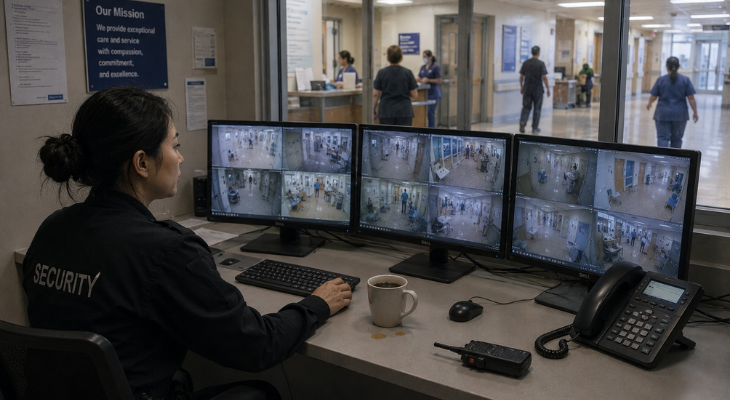
Video monitoring, controlled storage areas, and security patrols help reduce these risks. Healthcare facilities increasingly use integrated monitoring systems to track activity around pharmacies, equipment rooms, and loading zones.
Maintaining visibility across these areas helps hospitals identify suspicious behaviour earlier and strengthen accountability across operations.
Visitor Management and Crowd Control Challenges
Hospitals experience constant public traffic. Family members, contractors, delivery personnel, volunteers, and visitors all move through the facility daily. During emergencies or high-stress situations, visitor traffic can become difficult to manage quickly.
Healthcare facilities must balance accessibility with security. Open public access improves patient support, but uncontrolled entry creates safety concerns.
Modern healthcare security strategies now place stronger emphasis on visitor screening, controlled entry points, and monitored access hours. These measures help reduce unauthorized movement while maintaining a welcoming environment for patients and families.
Hospitals also face increasing pressure to improve privacy protection. Controlled visitor management helps reduce risks involving restricted patient areas and confidential information.
Security Risks During Healthcare Emergencies
Hospitals must remain operational during severe emergencies. Fires, severe weather, power outages, infrastructure failures, and mass casualty events all create major operational pressure.
Security teams play a critical role during these situations. They help secure entrances, direct movement, support evacuations, and maintain communication between departments.
Healthcare facilities must prepare for these disruptions before emergencies occur. Strong crisis planning improves response coordination and helps hospitals continue operating under pressure.
Gaps in Video Monitoring and Incident Visibility
Many healthcare facilities still operate with surveillance blind spots. Parking structures, loading areas, isolated hallways, stairwells, and secondary entrances may receive limited monitoring coverage.
These visibility gaps increase risks involving theft, unauthorized access, workplace violence, and safety incidents.
Modern video monitoring services help hospitals improve real-time visibility across vulnerable areas. Faster incident detection supports quicker response times and better evidence documentation after security events occur.
Healthcare facilities increasingly combine surveillance systems with live monitoring, access control, and mobile patrol support to create stronger layered protection strategies.
Why Integrated Healthcare Security Matters in 2026
Healthcare security now requires a layered approach. Hospitals can no longer rely on a single solution to manage growing risks.
Modern healthcare facilities often combine:
- Healthcare security guards
- Access control systems
- Electronic security infrastructure
- Remote monitoring
- Cybersecurity coordination
- Emergency response planning
This integrated strategy improves communication between departments while helping hospitals respond faster to evolving threats.
Strong healthcare security also supports staff morale. Employees who feel safe are better positioned to focus on patient care and daily operations.
Final Thoughts
Healthcare security risks continue evolving across Canada. Hospitals now manage physical threats, cyber incidents, emotional confrontations, operational disruptions, and privacy concerns simultaneously.
Facilities that strengthen healthcare security planning improve protection for patients, visitors, staff, and critical infrastructure. In 2026, proactive healthcare security is no longer optional. It has become an essential part of maintaining safe and reliable healthcare operations.
About Us
GPS Security Group provides professional healthcare security services for commercial and institutional facilities across Alberta and Western Canada.
The company supports hospitals, clinics, healthcare facilities, and high-traffic environments with healthcare security guards, video monitoring, access control support, alarm response, and integrated security strategies.
Their teams understand the operational demands healthcare environments face every day. They help facilities improve safety, strengthen incident response, and maintain better control across complex public spaces.
Businesses and organizations seeking professional healthcare security support can contact us today.