Connected Security Capabilities
Our technology capabilities support different parts of a security operation, from reviewing camera activity to locating available officers and monitoring defined areas of a site.
Focus camera review on relevant human and vehicle activity while reducing attention given to common false-alarm triggers.
Use real-time officer location information to support mobile security coordination and proximity-based alarm response.
Maintain off-site visibility across selected camera views and other confirmed monitoring priorities.
Consider perimeter detection, access control and environmental monitoring requirements as part of the site security plan.
Focus On Relevant Activity
AI Video Analytics helps focus attention on human and vehicle activity within selected areas of interest. Cloud-based filtering can reduce alarms caused by common triggers such as weather, animals, moving trees, shadows and changing light.
The purpose is not simply to record more footage. It is to make relevant activity easier to identify across the camera views included in the monitoring arrangement.
Location-Aware Coordination
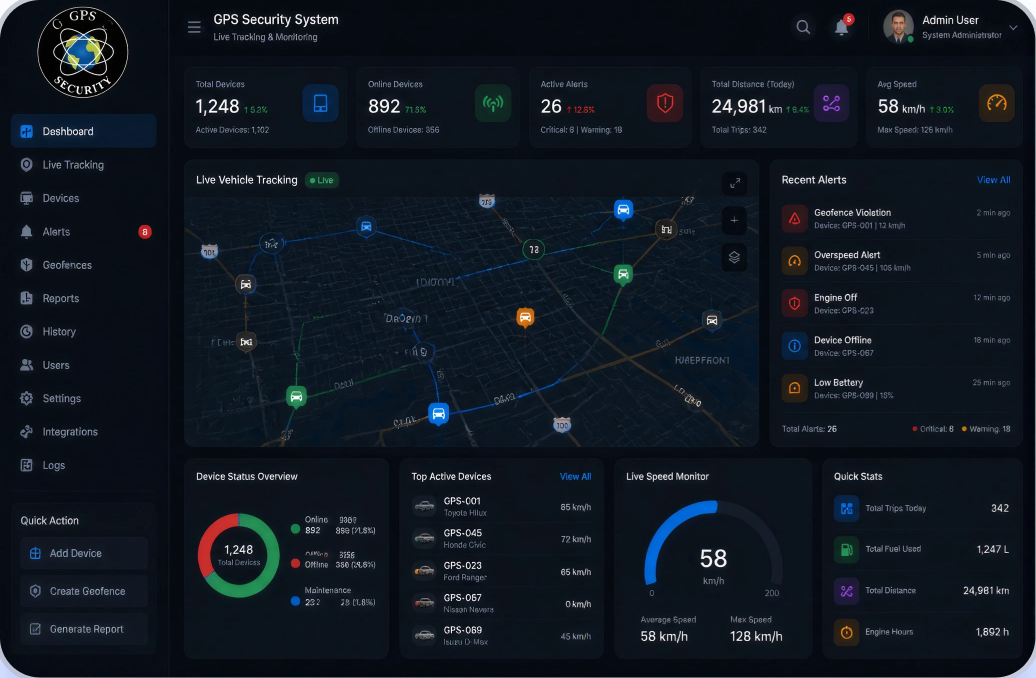
GPS Fleet Tracking gives our dispatch team real-time visibility of GPS-equipped security officers. When GPS Security receives notification of an activated alarm, officer location information helps identify an available guard positioned near the affected property.
This technology supports more informed coordination without creating a guaranteed arrival time. Actual response depends on officer availability, traffic, property location and the agreed service arrangement.
Extend Security Across The Site
Cameras are only one part of a technology-supported security plan. Depending on the risks and infrastructure at the property, additional requirements may include perimeter detection, controlled entry, environmental awareness or protection against equipment disturbance.
The exact devices, connectivity and monitoring arrangements must be confirmed for each location.
Support awareness of activity or disturbance around boundaries and other defined areas. Available sensor types and detection methods should be confirmed for the site.
Consider heat, gas, fire or other environmental conditions that may affect people, assets or operations. GPS Security will confirm which monitoring options are available.
Manage entry requirements for gates, doors and restricted areas. The appropriate system depends on the users, access points and operating procedures involved.
Consider whether valuable equipment or protected assets require additional monitoring. Available detection and alert options should be confirmed during assessment.
Broader Remote Visibility
Remote Security Monitoring can help organizations maintain visibility when managers and security personnel cannot observe every area directly. Camera views, alerts and relevant site information can support a clearer understanding of what is occurring away from the monitoring location.
GPS Guardian™ broadens this approach beyond conventional security activity. Its identified intelligence areas include security, environmental conditions, fire, forest fire risks, hazardous materials and chemical spills.
Operator Monitoring Stations
Active Live Camera Feeds
Different Sites, Different Priorities
The right technology depends on the property, the activity taking place there and the consequences of losing visibility. A fixed commercial facility will not have the same requirements as an active construction site or a remote industrial operation.
From Site Risk To Monitoring
Security technology should be selected after the risks, priority areas and available site infrastructure are understood. This prevents equipment from being chosen without a clear operational purpose.
Define the security, access, environmental or operational concerns affecting the location.
Determine which buildings, boundaries, entrances, equipment or work areas require visibility.
Review which cameras, sensors, tracking or access-control options may suit the identified requirements.
Confirm how information should be reviewed, who should receive alerts and which response options are available.
Plan Your Security Technology
Tell us about your location, current security systems, priority areas and operating risks. We will review the requirements and explain which video analytics, tracking, monitoring, perimeter or access-control options are available for your site.