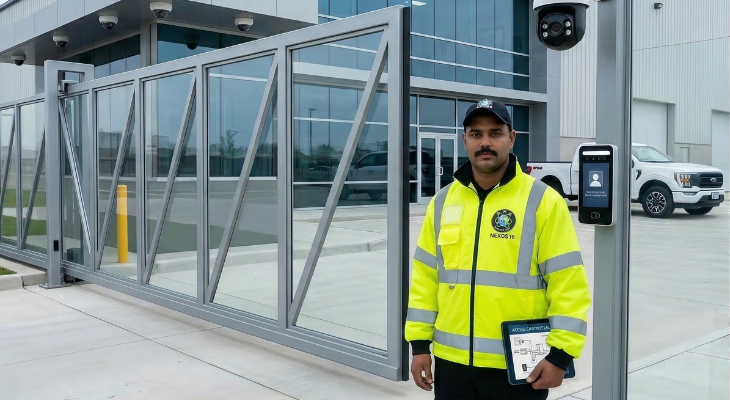
Commercial facilities across Alberta and British Columbia face rising operational risks. Theft, vandalism, cyber threats, and false alarms can disrupt business quickly. Even a short interruption can delay projects, impact revenue, and damage client trust.
Large warehouses, healthcare facilities, construction sites, and energy operations manage high-value assets every day. One weak access point or delayed alarm response can create significant loss. In competitive markets, operational downtime is not just inconvenient. It is expensive.
If your business depends on structured protection, you need more than basic coverage. You need a proactive strategy supported by professional security guard services for commercial facilities. Let’s walk through how to build a response plan that actually works.
Why Proactive Security Planning Matters
A reactive plan only responds after damage occurs. A proactive plan identifies risk before it escalates. That difference protects revenue, operations, and long-term stability.
Commercial facilities operate under constant pressure. Inventory moves daily. Staff rotate across shifts. Contractors access sensitive areas. Without structured oversight, small gaps turn into costly incidents.
Canadian workplace safety expectations reinforce this responsibility. Employers have a general duty to protect the health and safety of their employees.
Security planning supports that duty in practical ways. It reduces exposure to theft and vandalism. It strengthens access control and monitoring oversight. It also improves documentation during investigations and insurance claims.
When response procedures are clear, decision-making becomes faster. When systems are integrated, detection becomes more accurate. Proactive planning transforms security from a reactive expense into a controlled risk management strategy.
Step One: Conduct a Detailed Facility Risk Assessment
Every strong response plan begins with risk evaluation. You must understand your vulnerabilities before you can correct them.
Assess entry points, access control systems, lighting, and surveillance coverage. Review past incidents and alarm reports. Identify high-value equipment and sensitive areas.
In Western Canada, remote and industrial sites often face unique risks. Construction yards, oil and gas facilities, and warehouses require stronger perimeter control.
Ask yourself: where could someone gain access without detection? That question alone reveals weaknesses.
Step Two: Establish Clear Incident Categories and Protocols
Your team must know how to respond to different threats. Not all incidents require the same action.
Define response categories such as unauthorized access, vandalism, theft in progress, and cyber intrusion. Outline specific steps for each scenario. Document who responds, who reports, and who escalates.
The Government of Canada explains emergency readiness clearly. It states that being prepared can reduce fear, anxiety and losses that accompany disasters. Preparedness is not theoretical. It is an operational discipline.
Step Three: Integrate Physical and Electronic Security Systems
Many facilities operate disconnected systems. Guards, cameras, alarms, and access control often function independently. That gap creates delays.
Integration improves speed and accuracy. When your 24-hour monitoring service connects directly with on-site personnel, response time improves. Verified alarm detection reduces unnecessary dispatch.
Layered systems also increase deterrence. Visible security presence combined with surveillance sends a clear message.
If your site uses Mobile Security Trailers, integration becomes even more powerful. These units extend monitoring capability across temporary or remote locations.
Step Four: Train Personnel and Internal Teams
A plan on paper means nothing without training. Security guards and internal staff must understand procedures clearly.
Conduct regular drills and scenario simulations. Test communication flow and documentation practices. Evaluate how quickly incidents escalate through proper channels.
The Government of Canada emphasizes emergency readiness. It states that preparedness is a shared responsibility. Your security team plays a direct role in that responsibility.
Training also improves confidence. When employees know what to do, panic decreases, and response becomes controlled.
Step Five: Strengthen Alarm Verification and False Alarm Detection
False alarms waste resources. They strain relationships with local authorities. They also reduce urgency when real threats occur.
Strong alarm system monitoring service includes verification before dispatch. This step prevents unnecessary call-outs and protects operational credibility.
Ask yourself how often alarms trigger without a confirmed cause. If the number feels high, your system requires refinement.
Verified monitoring improves insurance documentation. It also protects your business reputation within the community.
Step Six: Develop a Crisis Management and Recovery Framework
Response does not end when the incident stops. Recovery planning matters just as much.
Document procedures for internal communication. Establish reporting templates. Coordinate with insurance providers efficiently.
Crisis management security should include post-incident evaluation. Identify what worked and what requires improvement.
A structured framework ensures your facility returns to normal operations quickly. Downtime costs money. Preparation limits that exposure.
Why Western Canada Facilities Face Unique Risks
Alberta and British Columbia host diverse industries. Energy, healthcare, warehousing, retail, logistics, and large construction projects operate under demanding conditions. Many facilities manage high-value equipment, sensitive data, and large workforces across extended hours.
Remote sites experience limited visibility and slower emergency response times. Industrial camps and resource operations often sit far from municipal support. Strong on-site security and verified monitoring become essential in those environments.
Urban centers face rising property crime, organized theft, and vandalism targeting commercial properties. Distribution hubs, parking lots, and storage yards are frequent targets. Large commercial facilities must adapt with layered protection and structured incident response.
The weather also plays a role. Harsh winters and seasonal shutdowns can create vulnerabilities during reduced staffing periods. Holiday closures increase exposure if monitoring and alarm response are not active.
If your business spans multiple locations, consistent planning becomes even more important. A unified response structure prevents confusion across regions. Standardized procedures ensure every facility operates under the same security expectations, no matter the province.
Common Mistakes Businesses Make
- Relying on cameras alone without active monitoring or verification support. Recorded footage does not prevent incidents in real time.
- Depending only on on-site guards without integrated electronic systems. Limited visibility reduces response speed and coordination.
- Failing to update response protocols as operations expand or shift locations. Growth introduces new access points and vulnerabilities.
- Neglecting regular testing of alarm systems and communication channels. Untested systems often fail under real pressure.
- Ignoring false alarm patterns instead of investigating root causes. Frequent false alerts reduce urgency and waste resources.
- Overlooking after hours risk exposure during weekends, holidays, or seasonal shutdowns. Reduced staffing increases the opportunity for intrusion.
- Allowing inconsistent procedures across multiple facilities. Mixed standards create confusion and delay during incidents.
A proactive response plan evolves with your operations. It adapts to new threats, technology updates, and changing workforce dynamics. Continuous evaluation keeps protection strong and aligned with real-world risk.
About Us
GPS Security Group is a professional security guard company serving Alberta, British Columbia, and Western Canada. We provide integrated commercial and industrial security solutions designed to reduce operational risk and strengthen deterrence.
Our team delivers licensed guard services, alarm response security services, video monitoring services, IT security services, crisis management security, and Mobile Security Trailers. Every deployment begins with structured risk evaluation and response planning.
If your facility requires experienced security support, connect with us. We work with construction sites, healthcare facilities, industrial operations, and commercial properties across Western Canada.