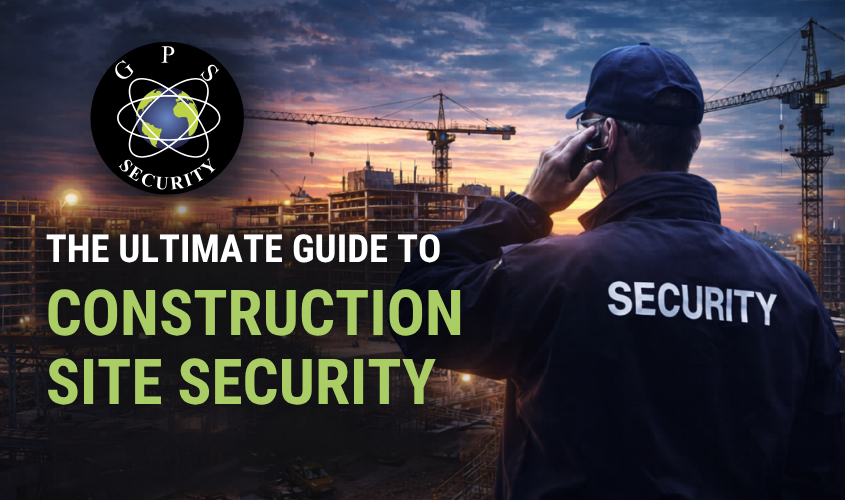
Construction sites are dynamic, high-value environments. Heavy equipment, copper wiring, fuel storage, tools, and building materials are constantly in motion and often left exposed after hours. Without a structured construction site security strategy, these environments quickly become prime targets for theft, vandalism, trespassing, and liability incidents.
Construction site security is not simply about installing cameras. It requires layered risk mitigation, controlled access, active monitoring, and trained security personnel working within a defined incident response framework.
This guide outlines the vulnerabilities, prevention strategies, cost considerations, and operational models required to properly secure a jobsite.
Why Construction Sites Are High-Risk Targets
Construction sites contain valuable materials, heavy equipment, and multiple access points that make them particularly vulnerable to theft and unauthorized entry. Understanding these risk factors is the first step toward building a strong and effective security strategy.
Rising Equipment & Material Theft
Construction equipment theft remains one of the most expensive categories of commercial crime. Commonly targeted assets include:
- Copper wiring and piping
- Generators
- Fuel tanks and diesel storage
- Power tools
- Skid steers and compact loaders
- Catalytic converters
These items carry high resale value and are often left unattended overnight.
Organized jobsite crime networks specifically target:
- Poorly lit perimeters
- Remote or rural construction projects
- Sites with temporary fencing
- Unmonitored access points
Without visible deterrence and monitoring, theft can go undetected for hours.
Financial & Operational Impact
A single security breach can result in:
- Project delays
- Equipment replacement costs
- Insurance premium increases
- Worker downtime
- Liability exposure
- Contractual penalties
Construction timelines are tightly managed. Asset loss or vandalism disrupts subcontractor scheduling and material delivery, compounding financial impact.
Construction site security protects not only assets, but also project continuity.
Construction Site Theft Statistics and Industry Trends
Construction equipment and material theft continues to be a significant financial burden across Canada. Industry reports estimate that construction-related theft results in millions of dollars in annual losses, with recovery rates often lower than other forms of commercial property crime.
High-demand materials such as copper wiring, diesel fuel, generators, and compact machinery are frequently targeted due to resale value and ease of transport. Economic downturns, supply chain pressure, and rising material costs have further increased organized theft activity.
These trends reinforce the importance of proactive construction site security planning rather than reactive loss management.
Recovery rates for stolen construction equipment remain relatively low compared to other commercial property crimes, making prevention significantly more cost-effective than recovery.
Core Vulnerabilities in Construction Environments
Construction sites face a unique combination of physical and operational vulnerabilities. Temporary infrastructure, fluctuating workforce access, and limited after-hours oversight create multiple exposure points. Understanding these weaknesses helps guide a more structured security response.
1. Open Perimeters
Temporary fencing often contains gaps, unsecured gates, or climbable sections. Vehicle access points may not be actively monitored.
2. Uncontrolled Access
Multiple subcontractors, delivery drivers, and vendors create access control complexity. Without credential verification and visitor logging, unauthorized entry becomes difficult to track.
3. After-Hours Exposure
Most theft occurs overnight or during weekends when:
- Equipment is stationary
- Supervisors are absent
- Lighting is reduced
- Monitoring is minimal
Unattended machinery becomes an easy target.
The 5-Layer Construction Site Security Framework
Effective construction site security requires a structured, layered approach.
Layer 1: Perimeter Hardening
Physical barriers form the first line of defence.
Key components:
- Chain-link fencing with anti-climb mesh
- Locked vehicle gates
- Concrete vehicle deterrent barriers
- Motion-activated floodlighting
- Controlled access points
Well-secured perimeters significantly reduce opportunistic intrusion.
Layer 2: Controlled Site Access
Access management limits entry to authorized personnel.
Best practices include:
- Guarded entry checkpoints
- Visitor sign-in logs
- Badge systems or credential verification
- Subcontractor screening
- Delivery verification procedures
Access control reduces internal theft and improves accountability.
Layer 3: Surveillance & Intrusion Detection
Technology enhances visibility and real-time response.
Common tools:
- CCTV surveillance systems
- Remote monitoring centers
- Motion detection sensors
- Alarm verification protocols
- Cloud-based recording systems
Video surveillance provides evidence documentation and acts as a visible deterrent.
However, surveillance technology alone is not sufficient without active monitoring and response capability.
Layer 4: On-Site Security Guards & Mobile Patrol
Human presence remains one of the strongest deterrents.
Static Construction Site Security Guards
Professional construction site security guards provide controlled access enforcement, visible deterrence, and rapid incident response.
On-site security guards:
- Monitor entry points
- Conduct foot patrols
- Enforce access control
- Respond to alarms
- Document incidents
- Provide visible deterrence
24/7 guard coverage is particularly important for high-value or high-risk sites.
Mobile Patrol Services
Mobile patrol units:
- Conduct randomized perimeter checks
- Verify locked containers and equipment
- Respond to alarm triggers
- Perform overnight inspections
Mobile patrol reduces predictability and increases deterrence effectiveness.
Layer 5: Incident Response & Risk Management
Effective construction site security requires coordination between site supervisors, contractors, and licensed security professionals. As projects evolve, new vulnerabilities emerge due to changing layouts, equipment deliveries, and workforce shifts. Ongoing reassessment ensures that security deployment adapts to real-world site conditions rather than remaining static.
In practice, sites that combine trained security guards with monitored surveillance experience significantly fewer repeat incidents than sites relying solely on passive security measures.
Security is incomplete without defined response procedures.
Essential elements:
- Digital incident reporting systems
- Evidence preservation protocols
- Escalation procedures
- Law enforcement coordination
- Risk reassessment cycles
Ongoing evaluation ensures the security plan adapts as the project evolves. A professional assessment identifies perimeter vulnerabilities, access control gaps, equipment exposure, and response readiness. Identifying these risk factors early allows construction managers to deploy security resources strategically rather than reactively.
Construction Site Security Services Explained
Construction site security services can be deployed individually or as part of a layered security program. The right combination depends on site size, project phase, asset value, and overall risk exposure. Below are the most common services used to secure construction environments effectively.
Professional construction site security services typically include:
Static Security Guard Services
Continuous on-site guard presence to monitor access, assets, and site activity.
Mobile Patrol Security
Scheduled or randomized vehicle patrol inspections, especially effective after hours.
Alarm Monitoring & Response
24/7 monitoring center oversight with rapid alarm verification and dispatch.
Fire Watch Services
Monitoring during hot work or when fire suppression systems are offline.
Equipment & Asset Protection
GPS tracking, equipment lock systems, and controlled storage monitoring.
Integrated security models combine these services for maximum risk mitigation.
How Much Does Construction Site Security Cost?
Construction site security cost varies significantly based on operational requirements and threat level. Rather than applying a fixed rate, security planning should begin with a structured risk assessment to determine appropriate guard coverage, patrol frequency, and technology integration.
Construction site security cost depends on multiple variables:
- Site size and layout
- Risk profile and theft history
- Guard hours required
- Patrol frequency
- Equipment value
- Urban vs remote location
- Technology integration level
Guard-based security involves hourly staffing costs, while technology-based solutions involve installation and monitoring expenses.
However, prevention cost is typically lower than post-theft recovery cost. Many construction companies underestimate the total impact of a security breach until after an incident occurs. Equipment replacement, insurance deductibles, project delays, and reputational damage often exceed the investment required for structured, preventive site protection.
A structured risk assessment determines the most cost-effective model.
Legal & Insurance Considerations
Construction security is not only an operational concern but also a legal and financial responsibility. Project stakeholders must take reasonable steps to protect workers, visitors, assets, and surrounding properties. Insurance providers increasingly evaluate security controls when underwriting or reviewing claims.
Construction companies have a duty of care to protect:
- Workers
- Visitors
- Assets
- Surrounding properties
Failure to implement reasonable security measures can result in liability exposure.
Security providers must comply with provincial licensing standards. In Canada, oversight bodies such as the Government of Alberta and WorkSafeBC regulate aspects of workplace safety and licensing.
Proper incident documentation, licensed security personnel, and defined escalation procedures demonstrate due diligence.
How to Secure a Construction Site at Night
Nighttime is the highest-risk period for construction sites.
Night Security Checklist:
- Lock all storage containers
- Immobilize heavy equipment
- Remove keys from machinery
- Activate perimeter lighting
- Enable motion detection systems
- Schedule overnight guard patrol
- Verify alarm system functionality
- Conduct final lock-up inspection
Randomized patrol patterns reduce predictability and increase deterrence.
Construction Site Security Checklist
A practical construction site security checklist helps ensure no critical protection measures are overlooked.
- Secure and inspect perimeter fencing daily
- Verify all access gates are locked after hours
- Maintain visitor sign-in and credential logs
- Install adequate lighting across entry points
- Monitor high-value equipment storage areas
- Conduct routine mobile patrol inspections
- Test alarm systems regularly
- Document incidents and suspicious activity
Using a standardized checklist improves accountability and supports insurance documentation.
How to Choose a Construction Security Company
Selecting the right construction security company requires more than comparing hourly rates. Experience in construction environments, response capability, and integrated security planning are critical factors that influence long-term site protection.
When evaluating a construction security company, assess:
Industry Experience
Do they specialize in construction and industrial sites?
Guard Training Standards
Are personnel licensed and background screened?
Response Capability
Is there 24/7 dispatch and alarm response?
Technology Integration
Can they combine guards, patrol, and surveillance?
Reporting & Transparency
Do they provide detailed incident logs and reporting dashboards?
A comprehensive provider should deliver both manpower and integrated monitoring.
Frequently Asked Questions About Construction Site Security
Below are answers to common questions about construction site security planning and deployment.
What is the best way to secure a construction site?
The best way to secure a construction site is through a layered security approach that combines perimeter fencing, controlled access, surveillance systems, on-site guards, and defined incident response procedures. This integrated model reduces theft risk and improves accountability.
Are security guards required on construction sites?
While not always legally mandated, security guards are often required by insurance providers, risk assessments, or high-value project specifications to reduce liability and theft exposure.
How much does construction site security cost?
Costs vary based on site size, guard coverage hours, risk level, and technology integration. A professional risk assessment determines the appropriate security deployment strategy.
Who is responsible for jobsite security?
Responsibility typically falls on the general contractor or site manager, though property owners and security providers share accountability in implementation and monitoring.
What are the most commonly stolen items from construction sites?
Common targets include copper wiring, generators, fuel, power tools, heavy machinery, and catalytic converters.
Protect Your Construction Site with Professional Security Support
Effective protection begins with understanding site-specific risks and implementing a structured response strategy that includes trained personnel, structured patrol procedures, and real-time monitoring.
GPS Security Services Group provides licensed construction site security guards, mobile patrol services, and integrated security planning designed to reduce risk, protect assets, and maintain project continuity.
If you are evaluating construction site security services, a comprehensive risk assessment is the first step toward protecting your assets, reducing liability, and maintaining project timelines.