
The pace of a live event, whether a concert, a corporate gathering, or a sporting match, leaves no room for delayed reactions. When a medical crisis, fire hazard, or security breach occurs, the first sixty seconds often determine the severity of the outcome. Many venue managers focus heavily on ticketing and concessions but overlook the critical need for a structured, fast emergency venue response. Deploying professional event security guards is not merely about access control, it is about engineering a rapid reaction force capable of preserving life and property before municipal first responders arrive. GPS Security Group specialises in integrating dispatch protocols with on-ground personnel to transform any venue into a resilient, safety-first environment.
Why Fast Emergency Venue Response Demands Professional Security
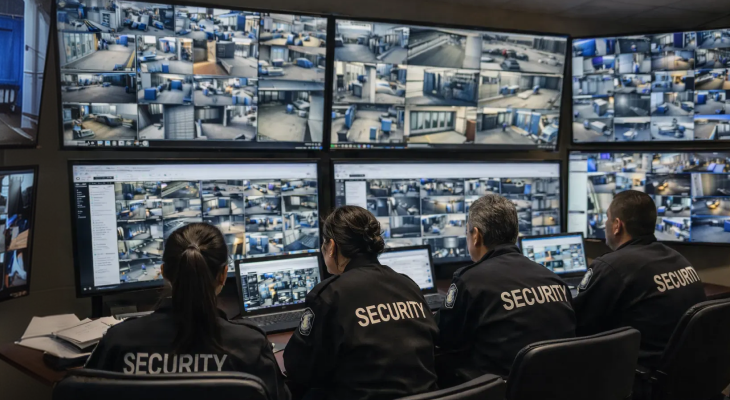
We employ a dispatch-centric model wherein a command post monitors live feeds and radio traffic, directing event security guards to the precise location of a disturbance within seconds of detection.
The Science of Rapid Dispatch in Live Environments
A fast emergency venue response begins long before an alarm sounds. It requires a pre-planned, layered security posture where every guard understands their role in a crisis timeline. Traditional static guarding fails in dynamic event settings because it lacks centralised coordination. This approach reduces the average response window from several minutes to under ninety seconds. For incidents such as a cardiac arrest on the concourse or a patron displaying aggressive behaviour in a queue, those saved seconds are clinically significant. The dispatch operator cross-references the venue’s ingress and egress points, immediately rerouting foot traffic away from the danger zone while simultaneously alerting paramedics. Without this structured coordination, individual guards are left to react subjectively, often leading to bottlenecks at stairwells and confusion among event staff.
Regulatory Compliance and Canadian Legal Standards
Event security in Canada operates under strict provincial legislation and federal recommendations for public safety. Venue owners who hire unlicensed or poorly supervised personnel expose themselves to significant liability under the Occupational Health and Safety Act and various fire codes. GPS Security Group ensures every deployment of event security guards complies with the standards outlined by Public Safety Canada. For authoritative guidelines on crowd management and emergency planning, venue operators should consult the Government of Canada’s Emergency Management and Public Safety resources, which provide frameworks for mass gathering risk assessments.
Compliance extends beyond licensing. A fast emergency venue response requires that guards hold current certifications in Standard First Aid and CPR, automated external defibrillator (AED) operation, and non-violent crisis intervention. Furthermore, venues accommodating over 200 persons must have a documented emergency plan that designates specific security personnel as floor wardens. GPS Security Group integrates these wardens into a unified dispatch system, ensuring that when a fire alarm or active threat occurs, the response aligns with the local authority’s incident command structure.
Core Components of Effective Event Security Deployment
Crowd behaviour follows predictable patterns that trained event security guards can recognise and redirect. The concept of crowd collapse or dangerous surge often begins with minor bottlenecks at pinch points such as merchandise booths or washroom corridors.
Real-Time Risk Mitigation and Crowd Dynamics
When an emergency does occur, such as a structural failure or a chemical spill, the dispatch protocol shifts to a triage mode. The first arriving guard secures a safety perimeter while a second guard guides venue staff to the nearest emergency equipment. Simultaneously, the dispatch centre notifies local police and fire services, providing them with precise GPS coordinates and the estimated number of persons within the affected zone. This level of integration is impossible with ad-hoc security arrangements.
Communication Infrastructure and Technology Integration
The fastest guard is useless if they cannot relay information clearly. GPS Security Group equips all our guards with noise-cancelling earpieces and encrypted digital radios, ensuring communication remains intelligible even beside loudspeaker arrays or industrial generators. The dispatch centre uses a redundant communication path: primary radio, secondary mobile phone network, and a dedicated satellite link for remote outdoor events. This multi-layered system guarantees that a fast emergency venue response is never crippled by a single point of technical failure.
Moreover, modern venues benefit from integration with mass notification software. When a guard reports an active incident, the dispatch operator can simultaneously trigger pre-recorded evacuation announcements, send text alerts to every staff smartphone, and activate strobe lighting at designated exit routes. GPS Security Group has successfully deployed this technology at convention centres and stadiums across Canada, reducing evacuation times for mock drills by nearly forty per cent compared to venues using uncoordinated security teams.
Strategic Implementation for Venue Operators
Complex venues with multiple stages, VIP sections, and back-of-house areas require a phased security posture. GPS Security Group assesses the venue layout and creates a tiered response plan.
Phased Deployment for Multi-Zone Venues
- Outer Tier: Event security guards stationed at vehicle barriers and ticket booths control initial access and detect threats such as prohibited items.
- Middle Tier: Guards covering concourses and hospitality areas focus on medical aid and conflict resolution.
- Inner Tier: Personnel operating backstage and in control rooms protect artists, executives, and sensitive equipment.
During an emergency, dispatch activates these tiers sequentially. The outer tier diverts incoming crowds away from the venue. The middle tier guides patrons to safe assembly areas. The inner tier secures emergency exits and assists mobility-impaired individuals. This phased methodology prevents the chaotic mass movement that leads to secondary injuries.
Pre-Event Planning and Risk Assessment
A successful fast emergency venue response is engineered during the planning phase, not improvised during a crisis. GPS Security Group conducts comprehensive venue audits that identify every potential hazard, from inadequate lighting in stairwells to unmarked utility access points. The audit produces a dynamic emergency response plan that assigns specific roles to each event security guard, establishes rally points for evacuated persons, and creates communication trees for notifying event promoters and local emergency services.
Conclusion
A fast emergency venue response is not an abstract ideal, it is a measurable outcome of professional dispatch systems, rigorous training, and proactive risk assessment. Venues that partner with GPS Security Group gain more than uniformed presence. They gain a coordinated tactical asset capable of reducing response times, satisfying Canadian safety regulations, and protecting both patrons and legal interests. Whether managing an indoor arena or an outdoor music festival, the difference between controlled resolution and catastrophic delay lies in the quality of your security deployment.
Do not wait for an incident to reveal the gaps in your current plan. Call us today to schedule a comprehensive venue assessment.